Step into almost any mosque in the world and your eye will be drawn to a niche set into one wall. This is the mihrab, a small but deeply significant architectural element that orients worshippers toward Mecca and serves as a focal point for prayer.
Though modest in function - simply indicating direction - the mihrab has inspired some of the most breathtaking artistic achievements in Islamic history. From the great mosques of Cordoba and Isfahan to neighbourhood prayer halls in Western Sydney, the mihrab reflects the creativity and devotion of the communities it serves.
The earliest mihrabs were unadorned recesses. Over time, they evolved into elaborate compositions of tilework, carved stucco, marble inlay, and calligraphy. The famous mihrab of the Great Mosque of Cordoba, completed in the 10th century, dazzles with gold mosaics gifted by a Byzantine emperor - a testament to the cultural exchange that flourished across medieval trade routes.
Geometric patterns feature prominently in mihrab design. These infinite, interlocking forms symbolise the boundless nature of creation and the unity underlying all existence. Calligraphic inscriptions, often verses from the Quran, frame the niche and transform the space into a meeting point between the written word and sacred architecture.
Colour carries meaning too. Blue, evoking sky and water, appears frequently in Persian and Central Asian mihrabs. Greens, associated with paradise in Islamic tradition, adorn mihrabs across Turkey and the Arab world. Gold leaf catches candlelight and speaks to the divine presence worshippers seek in prayer.
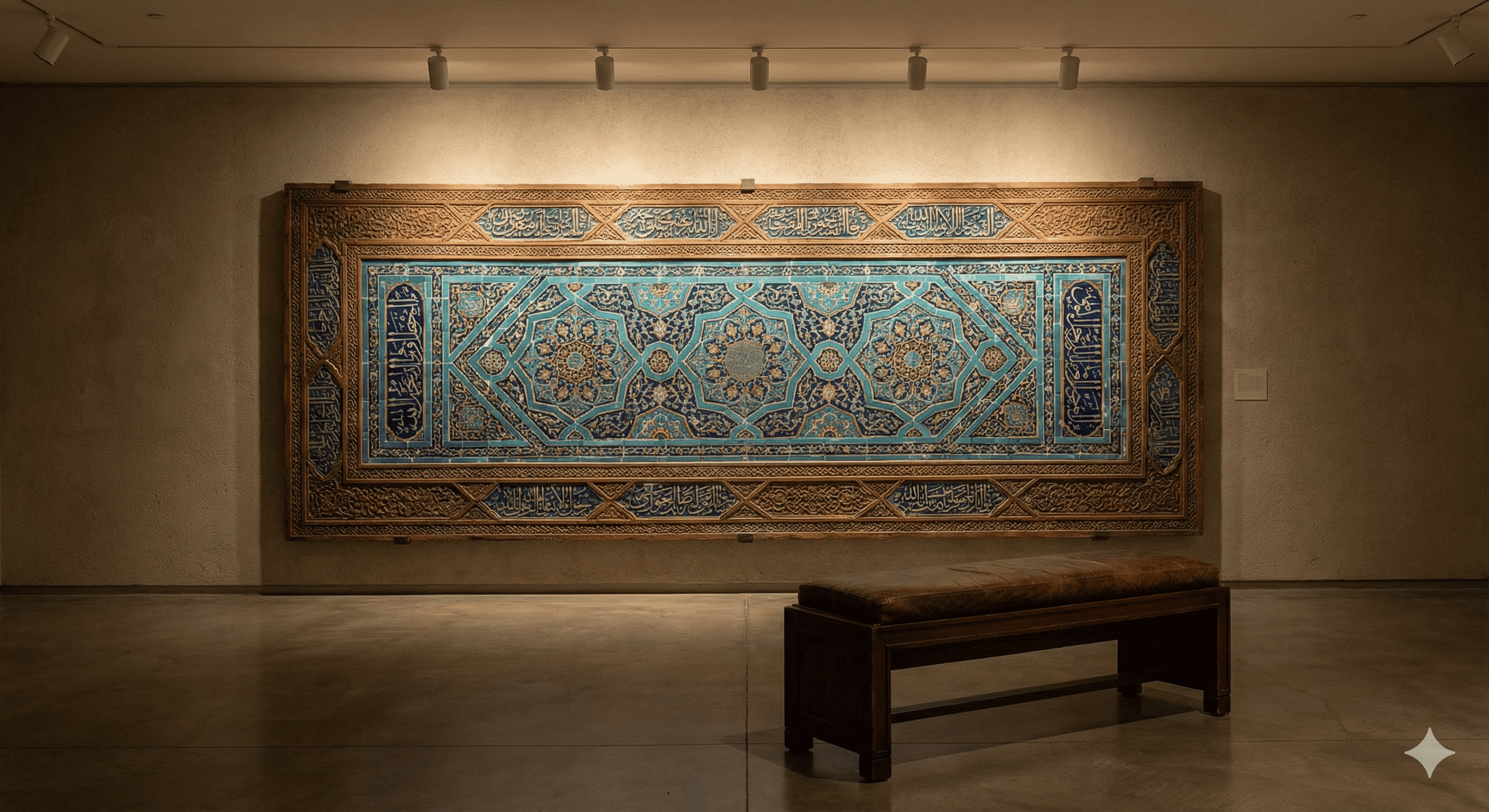
At MIAA, we are fortunate to house a 17th-century mihrab panel on loan from a private collection. Originally part of a small mosque in Uzbekistan, this piece features delicate floral motifs in turquoise and cobalt, surrounding a central arch of carved terracotta.
We invite visitors to spend time with this remarkable object and reflect on the centuries of craftsmanship and faith it represents. The mihrab reminds us that art in Islam is never merely decorative - it guides the soul toward something greater.






.jpg)
%20(1).jpg)
%20(1).jpg)