In Islamic tradition, the written word holds a place of profound reverence. Calligraphy is not merely decorative—it is an act of devotion, a discipline of the hand and heart that has flourished for over fourteen centuries.
The origins of Islamic calligraphy trace back to the earliest efforts to preserve the Quran in written form. As the faith spread across continents, so too did the art of beautiful writing, evolving into dozens of distinct scripts each with its own character and purpose.
Kufic, one of the oldest styles, is recognised by its angular, bold strokes. It dominated early Quranic manuscripts and architectural inscriptions. Over time, more fluid scripts emerged. Naskh became the standard for printed Arabic due to its clarity, while Thuluth, with its elongated curves, adorns mosque walls and chapter headings in sacred texts. The flowing Nastaliq script found its home in Persian poetry, perfectly suited to the lyrical nature of the language.
What makes Islamic calligraphy unique is its spiritual dimension. Many calligraphers begin their practice with prayer, viewing each stroke as an offering. The pursuit of perfection in letterforms becomes a meditation, a way of drawing closer to the divine through patience and precision.
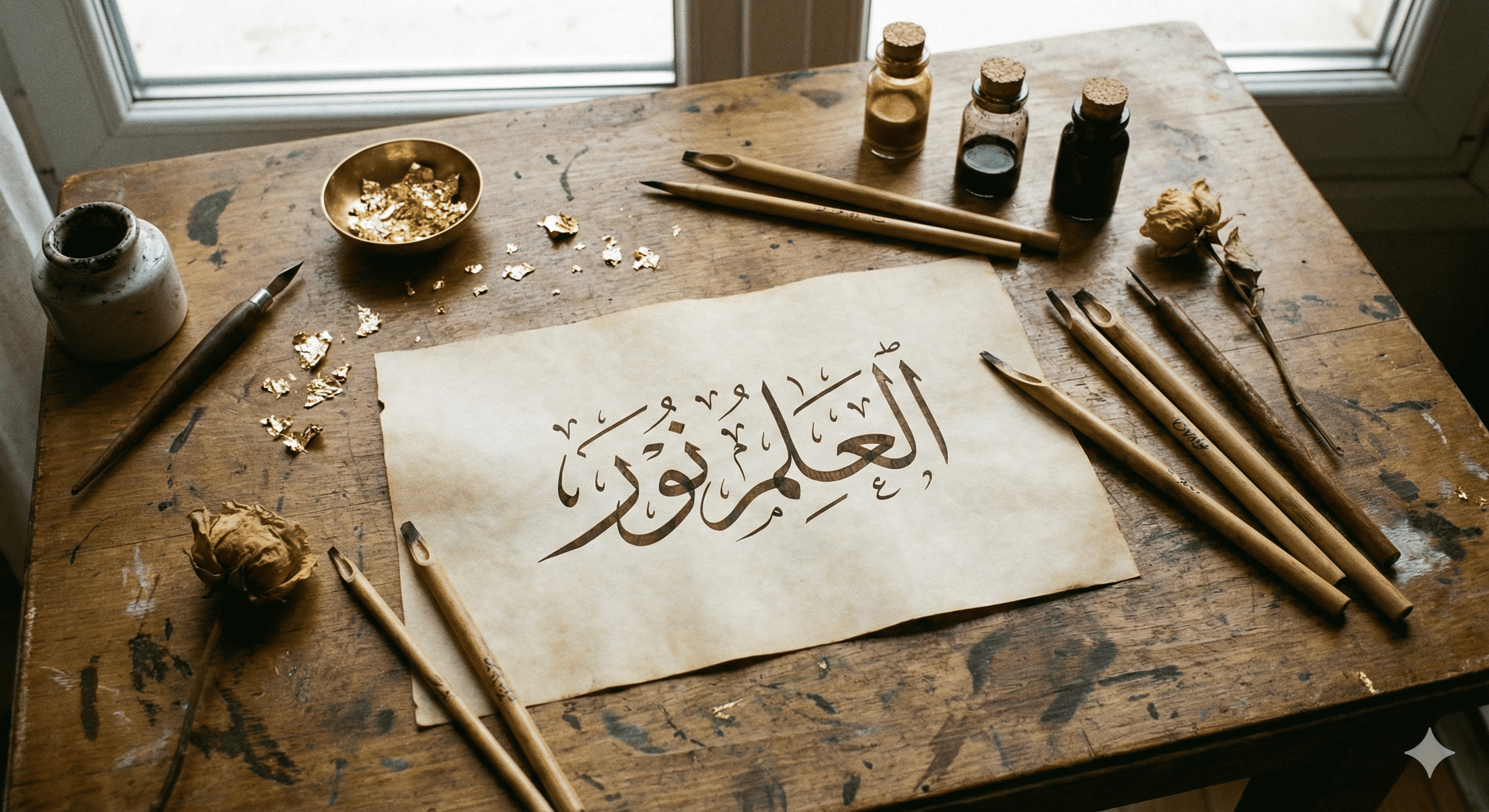
The tools themselves carry tradition. The qalam, a reed pen cut at a precise angle, responds to the calligrapher's pressure and movement. Inks are often handmade from soot and natural gums. Paper may be burnished with agate to create a smooth surface that allows the pen to glide.
Today, Islamic calligraphy continues to evolve. Contemporary artists blend traditional scripts with modern design, creating works that honour heritage while speaking to new audiences. Here in Western Sydney, MIAA is committed to celebrating this living art through exhibitions, workshops, and community programmes.
Whether you encounter calligraphy in a historic manuscript or on the wall of a local mosque, you are witnessing a tradition that connects generations across time and geography - a reminder that beauty and meaning can be woven into the simplest of letters.





.jpg)
%20(1).jpg)
%20(1).jpg)